Tampilkan postingan dengan label My articles. Tampilkan semua postingan

Kamis, 04 Juli 2013

Tell Tale Signs of Britishness At Home

From recipes to CDs, it's surprising what
little things give you away as non-native
Photo:Vangelis Thomaidis
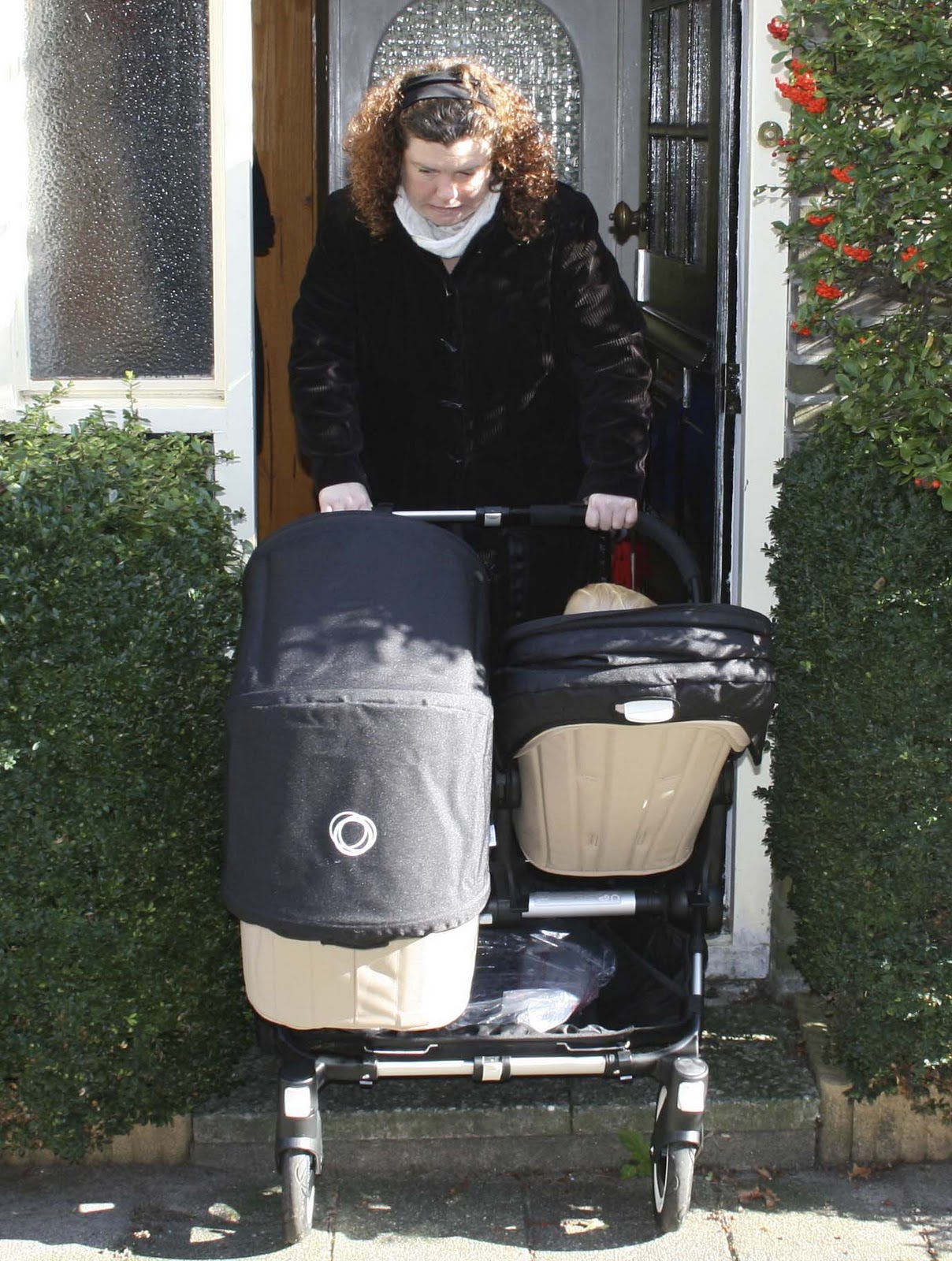
I wrote a guest post for Bringing Up Brits about how my three sons, who are predominantly Dutch, stand out from other Dutch boys because I am British. It got me thinking about how I stand out as British when Dutch people come to our house.
  • Music: Many of the CDs I own wouldn't have made their way into the average Dutch home. I'm talking about the very British music that never really made a name over here. The artists I mention that make my husband screw his face up in confusion. 
  • Food: My kitchen cupboards and fridge contain HP Brown sauce, Colman's Mustard, Paxo stuffing, Marmite, Branston pickle, Hayward's pickled onions, Ambrosia pudding rice and custard and Bisto. And the list probably goes on. These are not items you can get with ease in your local Dutch supermarket. They are expat shop specials, or brought lovingly over by visitors from England.
  • Recipe books: I have weaning books and recipe books written by Gina Ford and Annabel Karmel on my kitchen shelf. Most Dutch people will look blankly at me if I mention those baby and child (food and nutrition) specialists. And my Jamie Oliver books are in English instead of in Dutch like the majority of Jamie Oliver recipe book owners here. In fact I have a fair few British recipe books for delights such as apple crumble, Yorkshire puddings and roast dinners.
  • Books: The books I own are mainly in English. Me and Amazon.co.uk are best friends when it comes to getting English language books. That also includes books for my three boys to make sure their English keeps improving, and get to know very British nursery rhymes songs and classic stories.
  • DVDs: When we moved in together my husband and I amalgamated our DVD collection and there were quite a few duplicates but Dutch DVDs have Dutch subtitles available and British DVDs don't. 
  • Board Games: The British version of word games is always different to the Dutch version by way of the compilation of letters. For example the Dutch scrabble version contains 2 'J' tiles, whereas the British version contains 1. Playing Scrabble in Dutch with my British version and vice versa adds an extra challenge to the game which isn't wholly necessary. And of course British classics like 'Snakes n Ladders' is unknown in the Netherlands.
  • Bags: Giving a guest a carrier bag from Tesco, Marks & Spencers or John Lewis to take items home in suddenly seems exotic just because it's not from Albert Heijn or C1000.
What have I missed out? Look around you in your home - what gives you away as an expat?

Selasa, 28 Mei 2013

When Round Pegs Don't Fit in Square Holes: Expat Career Changes

There are many people who have inspired me along my expat journey. As my family life enters a new phase the last few weeks have been a perfect time to reflect. Part of that reflection resulted in an article that I submitted as an entry for Expats Blog's latest writing contest on the topic of working abroad.

Building a career overseas can mean becoming an astute
hurdler
Photo Credit: Lars van Mulligen
I moved to the Netherlands for love so I didn't have a job lined up when I packed up my gear and headed across the North Sea one grey, cloudy September day. I tried to get myself back into the world of work as quickly as I could. I needed to because we needed an extra income. We needed a place of our own to live in. Within a few weeks of landing on Dutch soil I was signed up with recruitment agencies, applying for vacancies as they came up and making telephone calls that I thought could help me. I took it one day at a time and jumped each hurdle as it arose.

Within a month or two I had a job in my field (Human Resources) though it was temporary cover for maternity leave and a step down from what I had been doing. But I had a hold on the career ladder once more. I was made permanent. The first two years or so were enjoyable. It was new. It was challenging finding my way around a new company. It kept the mortgage payments in check. When the project I was working on finished, I was palmed out to another department. And it was then that I realised, again, that I was a round peg and yet another employer was trying to squeeze me into a square hole.

I knew things had to change. I began writing. Just for my own pleasure. My own eyes. And then I started feeding that creativity into my day job. The more I delved into writing, and in particular expat writing, the more I bumped in to the name "Jo Parfitt". A Definite Articles course later and I was fully committed to getting out of an office cubicle. I was determined to leave behind endless demotivating company reorganisations and be free of meetings about quarterly profits. I wanted to take a career turn. Others had done it, so so could I. (In fact Expat Women published one of my first articles which was on the topic of making a career change abroad).

Jo Parfitt was an incredible inspiration and motivation in the early days of my writing career (and incidentally still is). She convinced me that I could write, and furthermore, could make a career out of it. Plus she was a 'real life example' that it really was all possible. She was certainly shouting encouragement from the sidelines from day one. And with that kind of support the step out of the rat race was made a whole lot easier.

I then stumbled into a Life Coaching group run by Karen Armstrong which was also a huge source of inspiration. I honestly don't remember anymore how I came to be a part of the group, or where I met Karen (aside from it being virtually) but it too played a huge role in my writing career. The group essentially came together to look at our individual reason for being, our mission in life, and our life goals in order to satisfy our reason for being. From haphazardly trying to manage a new career idea alongside being new to motherhood I emerged from the course with a clear vision and specific goals about what I wanted to do and where I wanted to go, not just with writing but in different areas of life. I still annually review this vision and these goals and create a new vision board to match my dreams. The group of women I took that path with were in themselves inspirational and the energy was contagious. Two of those women are the driving force behind Global Niche; Tara Agacayak and Anastasia Ashman. If you're looking to work beyond borders, to change a career, to transition, then those are the women to turn to for motivation.

So, back to my latest article. Expat life can be complicated. It presents challenges. Careers can be made or broken overseas. But expat life can also offer the opportunity to start over, to take time and reflect, to try and work out where your passion lies. And if you have the right support cheering you on from the sidelines? Well. then anything is possible.

Head on over to the Expats Blog writing contest page to read my article "Letting Go of the Career Ladder". If you enjoy what you read, please like using the Facebook button on the Expats Blog page, or leave a comment there to let me know you stopped by and share your thoughts on the topic.

Rabu, 02 Januari 2013

Happy New Year?

The most dreaded day of the year is over and we can all move on and welcome in 2013. I mean I'm glad that New Year's Eve is over.

I didn't always feel like this. The last day of the year always used to be cause for celebration, taking stock of the year behind me and looking forward to the year ahead. It was a night for fun spent with friends and family. A party night.


In the Netherlands however, the last day of the year is like entering a war zone. Normal people who wouldn't normally be associated with vandalism and causing a public nuisance suddenly develop the need to walk around town with a rucksack filled with fireworks, setting them off to cause the most noise and destruction possible. This means that rubbish bins are removed or sealed off, bus shelters are boarded up, post box openings are made so small you can barely get a letter through it and the local council sends out a brochure in which it recommends that you seal your letter box off with tape around New Year. Sounds like a real party huh?

Our street is a sea of red from the rubbish from fireworks set off on 31st December. Unfortunately those in our street responsible for all the fireworks set off are also the ones who seem only to be able to clear the direct area outside their own houses. Our garden is littered with firework trash from our neighbours. What a party that is to clean up.

And the best bit of all is reading on New Year's Day that the "celebrations" the night before were quite quiet and uneventful because only dozens of arrests were made in one town, only ten people were admitted with firework injuries at a hospital, only one young boy lost his hand, one station was vandalised, emergency workers were attacked, the fire brigade went from one fire to another..... you get the picture. Sounds like a real party huh?

What is great to see is the 'normal' display of fireworks set off across the country at midnight. Luckily the majority of Dutch people know what fireworks are for... and know how to welcome in 2013!

I hope that 2013 is a great year for you all and stealing the sentiment of a friend posted on Facebook:
"Forget the diets and the resolutions you always break.......just be the best you can be."

Happy New Year!!!


Minggu, 20 Mei 2012

The Expat Unfriendly Netherlands - Take Two

Not all Dutch things are easy to adapt to
(c) Amanda van Mulligen
Around a year ago I published a blog post which threw up the question whether the Netherlands was a friendly place to live for expats. The resounding response was no. And it was the most commented on post I have written - with comments still coming in.

It seems that most of you indicated that making friends with Dutch people is nigh on impossible. That Dutch people are very closed off (to expats) and that the local language is a serious barrier to friendships with the locals. Some of you were extremely negative, others were relatively positive. The positive comments indicated that the more effort you put in to making local friends, the more rewards there are to be had. The negative commentary indicated that all effort had been to no avail.

The ferociousness of some of the comments surprised me. The warmth of some of the comments about the Dutch and the Netherlands was encouraging (check out Tiffany's comment for example). I have been meaning to write a follow up post for many months now so here goes.... let the comment barrage begin once more.....

Dutch people are not openly embracing new people and swallowing them up into their social circle. They don't always come across as particularly warm at a first glance. But to dismiss them as rude and unfriendly is scathing and unfair in my eyes. I find most, if not all of the people that I come into contact with on a social level to be friendly, interested and communicative. I am not including employees in shops, bars or restaurants as they are a breed apart........

I think how you approach local relationships very much depends on your reasons for being in a foreign country, and how long you plan to stay. Integration is of course not high on the agenda is your stay is short term and employment based. Then you are more likely to mix solely in expat groups. And in the comments on my post a year ago a fair point was raised - if you are not going to be around for a while then the investment from the other side (i.e. the local) is also a lot of effort for little reward.

I moved to the Netherlands in 2000 because I met a Dutch man. My plan at that time was to move here and stay indefinitely. Twelve years later I have three sons, a husband and no plan to move back to my home country. My eldest attends school here. My other two will follow. I have learnt Dutch over the years and only speak English when my family or friends visit, or at home alone with my children so that they learn English. That already makes a huge difference making friends with local Dutch people.

The argument from expats is often that Dutch people speak very good English so they don't need to learn Dutch. However, many Dutch people feel very unsure of themselves speaking in English. I have so often heard "I don't speak English well" when in fact their English is pretty good. The fact is that language is a barrier to local friendships. Someone is always speaking a second language (usually the Dutch person) and it hinders deep conversation in many cases. Confidence takes a knock - and lets face it communicating with people in a second language is not the path of least resistance.

There is also an issue of culture. My husband and I grew up a matter of a few hundred kilometres from each other and yet our youths are very different because we lived in different countries. So whilst he is reminiscing with friends and family about TV programs, music or the activities he undertook as a child I can only sit and blankly stare. And it works vice versa. Bagpuss? Fingermouse? Bucksfizz? Forget it - he doesn't have a clue what I am talking about. Common ground is needed for the basis of a relationship - and this is where Tiffany's wise words ring true:

"Of course, I joined an expat group as soon as I moved here, but I also realised I needed to make Dutch friends and would never do so just hanging around my expat haunts. So I signed up to be paired with a native Dutch speaker to improve my Dutch, I joined an all Dutch vocal group, I made an effort to get close to my husband's friends, I went to dance classes and other events where I'd meet like-minded Dutch people, I chat with neighbors while I'm out walking the dog."

Having my eldest in school has been a trigger for a huge increase in social contact with Dutch people. Because there is suddenly something in common - our children are in the same class. We face the same issues. We share the same daily spaces. Most are friendly and warm. My experience is not unique. An anonymous comment on the post from last year stated:

"I speak the language, which has made a huge difference, but it was when I started volunteering for school and community activities that I really felt I had a place here."

The Dutch people I meet ask about where I come from, how I experience life in the Netherlands, whether I miss England, what I miss about England, and whether life in the Netherlands is easy for a Brit. There is interest. There are questions. Because I can talk Dutch with them. And it doesn't matter to them that there is an accent, or that sometimes I mix my words. The fact that they don't have to struggle along in English with me is a big relief for many.

I'm not saying it's easy at all - but there is another side to the story. The context in which you meet Dutch people is important - do you have anything in common to start from? Is language a barrier? It has taken years and years and years to build up what I would call any level of local friendships here. It hasn't been easy and it seems that is goes a natural course as you get more integrated and feel more at home in your host country. If you feel more at home, you are more yourself, you have the confidence to join local groups, to tackle conversations in a foreign languages - to take the time to invest in relationships.

There's always light at the end of the tunnel
Photo: John Nyberg
For those reading these posts before making a leap to the Netherlands, or anywhere else for that matter - don't be put off. Moving abroad isn't easy. But there is always light at the end of the tunnel! You just need to make sure you constantly move forwards to get there.

One final thought - think about the friend base you have in your home country - how long did it take to build those friendships up? Rome wasn't built in a  day as the staying goes.......

It would be interesting to hear from anyone who commented a year ago..... has anything changed for you? Anyone else feel that their effort with the locals has been worth it?

Jumat, 10 Februari 2012

One or Two Languages?

Is the Dutch language
suffering because of
bilingualism?
Following a Radio Netherlands Worldwide article about bilingualism in kids I wrote a blog post on Life with a Double Buggy. The conversation and discussion has been popular on Twitter and on the blog - the short version is that the article reported that the Dutch consultatiebureaus advise parents to teach their children open language only - and therefore do not encourage bilingualism in children here. This goes completely against my own experiences - and that of many others.

Want to join in or read more? Pop over to Life with a Double Buggy and let us know about your experiences. For those in other countries, what do you think about teaching your children two or more languages? 

Kamis, 05 Januari 2012

A New Blog for 2012

2011 has brought lots of changes to the van Mulligen household. One of the consequences of these changes is that my focus has been solely on my role as a mother for the last few months.

Time restraints have left this blog a little neglected in recent months and whilst I haven't had time to sit in front of my PC and write, I have had lots of time to think.

Becoming and fulfilling the role as a mother in a country not your own brings its fair share of challenges, questions and unforgettable experiences. The language and culture are different. The systems and support processes are unexplored territory for new parents abroad. Sometimes it's hard to know where to start, where to turn and what it all means.

With the birth of my third child in the Netherlands, I've decided it's time for a change in direction for my blog writing too.

I am excited to share the creation of a new blog entitled "Life with a Double Buggy". My new blog will focus solely on parenthood, and particularly the expat parenthood journey. It will be a platform to share my parenting experiences here in the Netherlands. I hope it will help and entertain other expats out there.

That's not to say that A Letter from the Netherlands is dead, far from it. It will remain here and I will also post on different topics here and there when I can. In short, whilst this blog is still being read it will continue to occupy this space!

I hope that many of you will follow me over to "Life with a Double Buggy" and I look forward to reading your comments along the way.

Rabu, 29 Juni 2011

Expat Friends - What Are they Worth?

Friends
Photo: Sanja Gjenero
When you are an expat your social circle is probably quite varied. How long you are living abroad, the circumstances that brought you to a new country and where you are living all contribute to the make-up of your friends abroad.

For my newsletter in June I wrote about the friends you make as an expat and how they compare to the friends you already have back 'home'. Here's an extract:

A recent expat survey conducted by the HSBC concluded that expat life in the Netherlands is not easy. The results claimed that it’s hard to learn the language, make friends and integrate into the local culture and community.


I ran a blog post on it back in May and the comments came pouring in from expats in the Netherlands, as well as Dutch readers.


It seems that many of the readers wholeheartedly agree with the survey conclusions. Making friends with the locals seems to be a real stumbling block and most people find themselves friends with expats, despite the effort they perceive they put in with the local people.


It’s an interesting topic – friendships when you’re an expat. Are they different to the friendships you form if you stay in your home country? Are the friends you make whilst you are abroad as close as the ones you have back “home”? Are they as long lasting? It got me thinking……

You can read the full post here and if you want future editions of the monthly newsletter Expats@Home delivered straight to your inbox you can sign up on the home page of www.thewritingwell.eu.

Minggu, 15 Mei 2011

The Expat Unfriendly Netherlands

Hard to make friends, difficult to learn the local language, fit into the local culture and integrate into the local community. Does this sound like your expat life in the Netherlands?

According to the Expat Explorer Survey carried out for HSBC Bank International the Netherlands placed last out of 25 countries, making it the most expat unfriendly country you could hope for.

Only 36% of expats relocating to the Netherlands find it easy to make friends here and 55% have concerns about the barriers that the local language put up. According to the survey, expats find the Dutch culture hard to fit in to and integrating in to the local community is far from easy here.

The difficulty of making friends in the Netherlands, particularly with the locals, is a common expat forum topic. Learning the language is a common talking point too but for the Netherlands to score so badly on these points did surprise me.

On the other hand, I did feel like shouting  "You see!" to someone who once posted a comment on an article I wrote for the Telegraph. A reader going by the name of "Kingory" commented,

"The Netherlands is about the easiest place in the world to be an expat, the language is really easy if you can hack the pronunciation, English is widely spoken, less than an hour east of London, there are loads of expats there already, and they even have the UK BBC for God's sake!!

Kind of missing the point about trying to integrate I think, but nonetheless you would think that a move to a far flung destination would be tougher than a move to a Western European country.

I would love to hear your thoughts on this. Have you experienced problems getting your social life on track after moving to the Netherlands? Is the culture too much to adapt to? Do the survey results surprise you or confirm your feelings?

Minggu, 08 Mei 2011

What not to do on a Danish Beach

My latest article has been published on Velvet Escape (a brilliant travel blog run by Keith Jenkins). The article is part of a series about unforgettable travel memories and is about being stranded in a car on the beach - it's not something I can recommend you do as part of your next holiday but it certainly went down in the book as a "travel memory". The good news is that, as always, taking precautions can save your butt......

The full article is available on the Velvet Escape blog at http://velvetescape.com/blog/2011/04/what-not-to-do-on-a-danish-beach/

Minggu, 01 Mei 2011

Helmet Therapy in the Netherlands

Helmet Therapy - a fairly common sight amongst babies
in the Netherlands
Photo: (C) The Writing Well
Expatica has published my latest article on a topic which will be unfamiliar to most  - but it is a process we stumbled upon last year when the Consultatiebureau referred us through to a physiotherapist because my baby had a strong positional preference.

I found it very hard to find much information on helmet therapy (or redressietherapie) in the Netherlands, particularly in English, so I decided to share our story for other expat parents out there.

It is also to enlighten others who wonder why - babies with specially designed helmets is a common sight on the streets of the Netherlands these days.

You can read the full article on http://www.expatica.com/nl/health_fitness/healthcare/Helmet-therapy-in-the-Netherlands_17323.html

Rabu, 13 April 2011

Sorry, I'm British!

Photo: Les Powell
Wheeling my trolley around Tesco in England a few weeks ago, I was struck by the number of times people said sorry to me as they bumped in to me in some form or another. Shop workers careered around the store with huge trolleys to stock shelves, intent on getting the job done rather than giving customers right of way and the room to actually get their shopping done. Much as happens in my local Albert Heijn. The difference in England is that those behind the trolleys smile and say sorry as they push their way through. 

"Oh, how polite," I thought. However, after half a dozen incidents from shop workers and customers alike it started to get a little old. Could so many people really mean that they were sorry for pushing their way through or bumping in to me? Not likely. It's a stop word. It's a way of making it all seem a little more polite than it actually is. It's false politeness.

As English people, it is a habit and quite normal to say sorry if we bump into each other - even if it's not our fault. We just say sorry. It slips out without even realising it. It's a well known phenomena. Kate Fox wrote about it in her great book, "Watching the English". Michael Harling refers to the trend in his book about living in England, "Postcards from Across the Pond". We're famous for it. 

But during my last trip back to England, I realised with a jolt - it doesn't make it right. The Dutch barge their way through but don't apologise for it. The English push through whilst apologising. False politeness? An example of Dutch directness? It's definitely a baffling cultural difference!

Rabu, 06 April 2011

Expat Harem Guest Post - Rude Honesty: When Politeness is Cultural

Living in the Netherlands has forced me to be a little less sensitive about the things people say to me. This is because the Dutch tell it as it is and as a Brit that really is an alien concept. Us Brits like to bumble along putting things in a polite way so as not to hurt someone's feelings. It often means the real message is lost somewhere in the middle of the conversation. The Dutch see it differently - why waste time saying things in an indirect, insincere manner? When politeness is culturally ingrained it can certainly present a cultural conundrum for some expats......

I wrote a guest post for Expat Harem on this topic - what do you think? Polite lying or rude honesty?

Rabu, 30 Maret 2011

Driving Through Four Countries - An Exercise in Self-Preservation

I recently travelled back to the UK for a visit. We went by car using the Eurotunnel and hence travelled in a number of countries in one day: the Netherlands, Belgium, France and England. And the different driving 'styles' struck me.....

A12 in the Netherlands
Photo:L van Mulligen
It's not the first time I've mentioned it, but the Dutch do tend to like to stick close together on the motorway in the fast lane. It's called tailgating and it's actually illegal. Luckily most Dutch drivers who tailgate don't know this or simply don't care - and there aren't many police around to remind them on the motorways so it happens. It happens a lot. In fact it was actually pinpointed as the biggest annoyance for Dutch road users in 2010. Presumably it annoys the majority of Dutch drivers who think some distance between them and the car in front or behind is sensible and not those who glue themselves to the bumper in front. So that was my most notable observation on the Dutch motorways.

Then we passed into Belgium. You can usually tell that you have crossed the border as the quality of the road surface deteriorates dramatically. And as you jiggle your way down the motorway, something becomes very apparent. Belgian drivers are mad. They make Dutch drivers look tame. They tear down the fast lane with disregard to any speed limits (I learnt that foreigners caught speeding are treated severely by the police whereas the locals are not really bothered by law enforcement officers until they travel at the speed of space shuttles...) and they criss cross lanes as if they are the only vehicle on the road. Something worth watching out for in Belgium are cars with only five figures in the licence plate - these are drivers who obtained their driving licence with a pack of milk many decades ago (or at least they didn't have to take a driving test) ..... and the cars usually show much evidence of this.

Then we hit France. What redeems French drivers is that any driver probably looks good once you've escaped the Belgian roads unscathed. However, the French do something that none of their neighbours do - they keep their indicator on in the fast lane to let you know that they need to get past and they are not just using the fast lane to overtake - they are using the outer lane as their very own personal road to get to their destination as quickly as possible. Therefore, you really need to move over because they have priority. And there is no point just putting your ticker on - you're a foreigner and you still don't have 'fast lane priority'.

And then you drive onto the Eurotunnel train and marvel at how you've made it so far. It's time to sit and relax for the short trip under the Channel to Folkestone before your journey takes you on to the British motorways.

And then you notice the middle of the road attitude of English drivers. They sit in the middle lane of the motorway for no apparent reason. To legally pass them from the 'slow' lane you have to cross over to the 'fast lane' and then cut back to the furthest left lane. And they remain oblivious to the fact that they are causing mayhem around them as drivers criss cross to pass them. Some pass on the left, others on the right, but to no avail. I eventually worked out that some English drivers believe you have to pick a lane when you join the motorway and stick to it - no matter what. Horns. Lights. Cutting them up. None of it works.

So there you have it - Van Mulligen's observations of some of Europe's main highways. You have been warned.

Minggu, 20 Maret 2011

The Ins and Outs of Expat Careers: From Human Resources to Writing

This is the first post in the series about expat careers. To kick off the series I thought I would share my expat career experience with you.......

I moved from the UK to the Netherlands in 2000 and at the time I was a Human Resources (HR) professional. I had studied for a Post Graduate Diploma in HR Management and intended to continue practicing HR when I moved abroad.

Within two months I had a new job with a large international company in a HR role. But to start earning again I’d made many compromises. The position was lower than my UK role was, the salary less. It was a temporary role and working through an employment agency.

Despite the number of international companies based in the Randstad in the Netherlands I found that the job market for my niche was relatively small because my Dutch was nowhere near good enough to work in a Dutch company – and that reduced my options considerably.

Feeling insignificant in a big
office block
Photo: Ryan Smart
After years of working on a specific contract in the same company, having been given a permanent, direct contract with the company the project came to an end and I was moved within the organisation to another team. It went downhill from there.  I felt like a number not a valued team member, a face in the crowd. I started reviewing my career options. I needed creativity in my daily work life. I wanted to write for a living but didn’t really see how.

I considered how I could combine HR and writing and then I discovered Jo Parfitt and attended one of her courses. It was the springboard that took my career on a new direction. During the course, Jo made a general statement to the group which stuck with me,

“You can make a career of writing and you can earn well with it. But you need to be passionate about what you are doing.”

I knew I wasn’t passionate about HR anymore. It hadn’t fulfilled any of the hopes I’d had, especially for much of my time in the Netherlands. But I was passionate about writing.

When I went on maternity leave it was the opportunity to take stock and make the change. I never went back to my HR role nor the international company. I set up The Writing Well instead.

The main barrier was financial but my departure from my former HR position left me financially secure for a number of months so I had a safety net – plus the income provided by my husband’s role gave us enough security to support the inevitable drought times.

Setting up a business in the Netherlands turned out to be straight forward, particularly given the nature of my company. I visited my local Kamer van Koophandel (Chamber of Commerce) to register The Writing Well and then registered the company with the Dutch tax office. That was the administration taken care of.

I undertook a web design course with NTI so I was able to design and build my own website for the launch of The Writing Well. And then I began networking and producing articles for various expat websites and publications – for free.


It built up my name and portfolio and then paid work started to steadily flow in.

A while after I started writing, I started a distance learning course at the London School of Journalism to boost my professional skills and keep my personal development going.

For expats wanting to make a move into the world of writing, my advice is this:  choose a niche, know your market and grow your networks.

Working virtually is vital if writing is your chosen
expat career.  Photo: Maripepa
Grow a platform for yourself (or as Anastasia Ashman and Tara Agacayak call it – a global niche). Writing is a great expat career because it is portable. Your clients can live across the other side of the world and it makes no difference so long as you can work virtually in an effective manner. I would also add that you should make the most of distance learning courses.

You do need the support of those around you. My husband enables me to take the time to disappear into my home office and work because he takes on the household and looking after the children. He has motivated and supported me from day one and even before – and takes an active role in decisions I make, and activities I undertake relating to my business. Jo Parfitt has also been a great support over the years – somebody who remembers her network at every possible chance and points clients in the right direction.

To succeed in a career overseas I think you need to be able to effectively network, both virtually and face to face. You need to be passionate about what you are doing and it certainly helps to be creative – to think outside the box. Finally - believe in yourself.

  • Useful links for an overseas career in writing:

www.joparfitt.com
London School of Journalism

  • Here are just some of the websites that welcome articles which enable you to build a portfolio - 


And for inspiration to build a creative career doing what you love, no matter where you are visit Tara Agacayak's site - Turquoise Poppy.


Next week Louise Wiles shares her expat career story.

Minggu, 13 Maret 2011

The Ins and Outs of Expat Careers

Photo: Vera Berard
Next Monday a new blog series begins on "A Letter from the Netherlands" about pursuing a career when you live abroad.

Particularly for accompanying partners, and those who move overseas to live with a local, this subject is a thorny one. For some, moving overseas is the perfect opportunity to make a career change and take a risk doing that one thing they always wanted to do. For some an expat life opens up doors. Others find doors slammed hard in their face.

The reasons for being unable to pursue your current career abroad are varied: lack of work permit; qualifications not being recognised; no jobs available in the local arena; cultural differences; legal restrictions; retraining needed; safety reasons; language barriers..... and so it goes on.

But it's certainly not all doom and gloom as our interviewees will reveal. A move overseas is a tremendous career opportunity for those who can think outside the box and put their creative being to work.

Over the coming weeks I will be speaking to a range of expats in different countries about their careers and how a move overseas effected their working lives. They'll share their experiences and give tips and advice and share links and resources that have helped them along their expat career journey.

If you have an expat career story you would like to share, please send a mail to "amanda at thewritingwell dot eu" and I'll let you know how.

On the subject of expat careers, the March edition of the Expats@Home newsletter goes out tomorrow with guest expert Tara Agacayak telling us about creative careers. You can found out more and sign up at http://www.thewritingwell.eu/Newsletter.html.

Selasa, 15 Februari 2011

A Little Help in the Delivery Room for Expats: Doulas

Having a baby in a foreign country can be quite daunting and if your mum and your best friend live back in your country of origin then having your nearest and dearest around you at such an emotional time can be very hard to plan. However, hiring a doula can help - for many many reasons. A doula is someone who provides support (non-medical) during pregnancy, labour and the birth. For the birth of my second baby, I had a doula on hand and I would recommend it to anyone!!

If you want to know more, read an article I wrote for I Am Expat about my experience with a doula.

Minggu, 06 Februari 2011

Ten Things You Don't Know about The Netherlands and the Dutch Until You Move Here (Part 5)

(c) Amanda van Mulligen
The typical Dutch stereotype consists of cheese eating, clog wearing tall people talking a dialect of German with a backdrop of windmills sailing round on the flatlands. However, there is much more to this small country and the people who live in it than the rest of the world thinks. Here's the fifth and last part of a series on things you don't necessarily know about the Dutch and their country until you move here.

9. Politics is Fragmented, To Say the Least
Before I moved to the Netherlands, I had little experience or direct knowledge of how it is to live in a country under a coalition government. Since I moved to the Netherlands I have known little else. Until the last general election in 2010 in the UK, there has been no coalition in my lifetime, or my parents' life time come to that. Recent Dutch politics has been nothing but a series of coalitions, and unstable ones at that. To say recent Dutch governments have been fragile is an understatement - yet somehow that isn't reflected in daily life.

The newest Dutch government took a few months to form and was controversial to say the least. However, looking on the bright side - it could be worse... we could be living in Belgium where they have been living with no government for seven months.

The Dutch take to the Ice (c) A van Mulligen
10. The Dutch are Ice Crazy
Maybe I led a sheltered life in England but I had never stood on a frozen lake or seen people skating on natural ice until I came to the Netherlands. If we have a cold spell here, the shops are amok with Dutch folk trying to buy new skates. As soon as there is ice covering any waterway the Dutch make a mad dash for their skates and take to the ice like ducks to water. And they have a blast. I have never seen anything like it - the Elfstedentocht is a great example of the enthusiasm and excitement for skating in this little land.

Of course there is a dangerous side - lives are lost because of thin ice. At best, falling through the ice is certainly no fun and not something you forget in a hurry. My husband can attest to that!

Senin, 17 Januari 2011

The Hell of 1963 - An Elfstedentocht To Remember

Photo: (c) Amanda van Mulligen
The Elfstedentocht (Eleven Cities Tour) of '63 took place exactly 48 years ago today. The Elfstedentocht is a 200km skating marathon that takes place on frozen over canals, rivers and lakes in Friesland, in the north of the Netherlands - the country's biggest natural ice marathon and the world's longest.

1963 saw a particularly harsh competition, hence the label of "De Hel van '63". Temperatures dropped to -18 degrees centigrade. Only 126 of the 9,000 skaters who started the race crossed the finish line. Thousands of skaters suffered from frost bite, frozen eyes, broken bones and other similar horrible injuries

Dutch director, Steven de Jong, directed a historical drama based on the twelfth Elfstedentocht - 'De Hel van '63' was released in 2009 and it had very mixed reviews. However, I really enjoyed it and it's a great way to spend 108 minutes to get a good idea about the Dutch culture around skating, the importance of the Elfstedentocht, how the Elfstedentocht works in practice and how severe the 1963 drama actually was.

In a nutshell, the skaters pass through eleven Frisian cities, starting and ending in the Frisian capital of Leeuwarden. In each city participants collect a stamp (as well as in two secret locations along the route to stop cheating) but they must pass though all checkpoints by midnight to qualify as a finisher. The winner of 1963 was Reinier Paping - in conditions so severe he became somewhat of a national hero.


The last Elfstedentocht took place in 1997, but every winter the rumblings and hopes of the event taking place 'this year' surface. In fact, at the end of last year, there was a flare of (unfounded) optimism when weatherman, Harry Otten ( Wereldomroep) said if everyone went out to clear the snow from the ice there could be an Elfstedentocht 'next week'. In reality, the ice was not thick enough (it needs to be 15 cm thick across the entire course).

I am looking forward to the year it can be held - what an event that will be!

Rabu, 12 Januari 2011

Expat Book Review: Postcards from Across the Pond by Michael Harling

Michael Harling is an American who accidentally ended up living in the UK. He met his future wife in Ireland and moved to Sussex to be exact. And having been raised in a rural area of corn fields and cow farms, a twenty minute drive from the nearest shop, Sussex must have seemed a little crowded to this new immigrant in town. In any case, the move from the US to the US certainly gave Harling enough fodder for an amusing book about life in Britain through the eyes of a foreigner.

This book is not only a funny read, but highlights something interesting: For an American, a move to the UK would seem an easy one to make - the language is (almost) the same, the culture is not worlds apart. However, Harling soon discovered that the differences lay in the small things in daily life. He found that everything "is just off-center enough to give you a sense of permanent imbalance." This struck a big, clanging chord with me.


I wrote an article for The Telegraph last year about the differences between life in the Netherlands and life in my native Britain. A reader commented that adjusting to life in in the Netherlands was in fact a piece of cake and the two countries really are very alike. But they are not - and I think Harling hits the nail on the head with his observations of life in Britain: When you move to a far off land you expect life to be very different, when you to a country nearby or one with much in common you don't expect your life to be rocked. But it is - just by leaving your home country.

The differences lie in the little things like posting a letter, getting a parcel delivered, getting a social security number, driving, shopping, sports, weather, TV, queuing, bureaucracy.... Need I go on? 

Luckily, this book is not a mammoth whinge about everything in the UK being inferior to its US cousin. Au contraire, Harling doesn't see all the adaptations he needs to make as a step in the wrong direction. In fact, he gives the impression that he actually quite likes a lot of the differences - once he got used to them.

In this book, which is actually a collection of blog postings he has made over the years, he shares his astonishment at the lack of St. Patrick's Day celebrations in England; his difficulty buying shoe laces; his confusion playing the game of rounders (which he likens to baseball until he sees the bat. "The bat resembles a giant rolling pin with only one handle," he explains); the haphazardness of the local bus schedules; and trying to recreate Thanksgiving away from the US ("Last Thursday was Thanksgiving, and 60 million people on this island didn't give a shit," he tells us).

This book is 172 pages to make you titter (a word us Brits can use without sniggering) and it's a great read for all expats everywhere, for Brits who can laugh at themselves, and Americans who want to know how different life is on the other side of the Atlantic.

His blog of the same title (where he describes himself as an "American author living in the south of England, sort of like Bill Bryson but without the best selling books and gobs of money") is http://postcardsfromacrossthepond.blogspot.com/ 

Senin, 10 Januari 2011

Guest Post For Clogs and Tulips

Photo: (c) Amanda van Mulligen
If you have any interest in what it's like to have a baby in the Netherlands, then I've just written a guest post for Tiffany's blog, Clogs and Tulips.

"If you trawl expat forums, you are likely to come across some heavy criticism of the Dutch maternity system. And yes, I agree, having a baby in the Netherlands may not be the same as having a baby back in your home country but there are worse things you can do. Here’s what I’ve learnt through two pregnancies and births in the Netherlands."

Read the full post here.