Tampilkan postingan dengan label free will. Tampilkan semua postingan

Kamis, 04 Agustus 2016

EXISTENTIALISM

...

The philosophy of Existentialism considers that:

Human beings are free to choose:

(1) to do right or wrong

(2) what to value

(3) how to live.


Existentialists consider that:

A. The world is not orderly or meaningful.

B. Human beings have no pre-existing or set nature or character. 

C. Some people may be born handicapped, or Black, or White.

But everyone is free to be a good or a bad person.

Soldiers are free to disobey orders.

D. Instead of getting our code of behaviour solely from dodgy ancient gods or texts, we should look inside ourselves.

E. Each individual has to work things out for himself/herself and then lead the appropriate life.

On Being An Existentialist

...

Søren Kierkegaard was the first Existentialist philosopher.

Kierkegaard came to believe that, by the 19th century, Christianity had deviated from its original meaning of 'mercy, humility and loving-kindness'.

Kierkegaard equates God with Love.[3]

Thus, when a person engages in the act of loving, he is achieving an aspect of the divine.

When an individual does not come to a full realization of his infinite side, he is said to be in despair.


"Kierkegaard was an unhappy, neurotic, and terribly suffering man."

Soren Kierkegaard.

...

Where did Kierkegaard perhaps go wrong?

Kierkegaard said that you feel anxiety because you see that you and you alone are responsible for your actions.

Kirkegaard often had doubts about God.

Imagine if Kierkegaard had tuned into 'something outside himself' and become a happy nurse or doctor.

Imagine if Kierkegaard had been less obsessed with himself.

...

Existentialists believe that when you're born, you have no meaning and no purpose.

Existentialists believe that there is no 'morality' in the world, other than the 'morality' that individuals create from inside themselves.

In other words, morality is not part of the fabric of the world.

Many Christians, Buddhists, Taoists and Humanists would argue that there are signs of ethical behaviour in the world of nature.

...

Friedrich Nietzsche was an existentialist.

He believed that life is 'will to power'.

This idea has appealed to some Nazis and Zionists.

Jean-Paul Sartre was an existentialist.

"Sartre believed that since there is no God to design man, man has no blueprint, no essence. 

"His essence or nature comes not from God as Creator but from his own free choice."

Sartre by Peter Kreeft.

...

Albert Camus did not consider himself to be an existentialist, although his ideas seem identical to those of the Existentialists.

Camus wrote The Stranger (L'Étranger,1942).

According to Camus:

"In a universe suddenly divested of illusions and lights, man feels an alien, a stranger.

"His exile is without remedy since he is deprived of the memory of a lost home or the hope of a promised land."

This is the problem with most Existentialists.

They generally reject such things as Reincarnation, the Holy Spirit, the Tao and all things Serendipity.

...

Some people believe that our minds co-create reality.

ESCAPE THE FILTER BUBBLE.


aanirfan.blogspot - alexa rank - #330,097 (18 Aug 2015). 

~~

Jumat, 08 Juli 2016

NON ATTACHMENT; HEALING

...

A hospital doctor enters a ward for sick children who have a variety of ailments and disabilities.

Ideally, the doctor avoids being infected by any 'germs' that the children might be carrying.

Ideally the doctor avoids being 'infected' by any physical and emotional pains that the children might be suffering from.


There are a lot of children with 'problems'.

In the USA, 'child disabilities due to neurodevelopmental and mental health problems have increased greatly.'

'Nearly six million kids had a disability in 2010 - almost one million more than in 2001.'

dailymail

If we were to be infected by the physical and emotional pains of all these millions of children we would be in trouble.

shoes

However, we can have an influence for good on someone who is suffering.

1. Scientists have discovered that pairs of tiny particles can be invisibly connected even when they are some distance apart.

When the scientists carry out an action on one particle, the other particle is instananeously affected, even though it is many miles apart.

A Dutch team has proven that 'spooky action at a distance' is real.

dailymail.

2. According to some research at Princeton University

We can mentally influence - and are influenced by - the thoughts of others.

We can mentally influence biological processes in bodies other than our own.

We can mentally influence the functioning of non-biological systems.

The Next Great Turning - Context Institute

Sia Furler's 'Chandelier', from the album 1000 Forms of Fear, suggests mind-control?

3. A team of psychologists from Saint Louis University claims that stress can be spread from person to person like a virus.

We can be infected by the stressed person's odour, posture, facial expression and tone of voice.

The researchers put the participants into pairs.

One member of the pair had to make a public speech and the other had simply to watch the speech.

The researchers measured the levels of cortisol and a stress-related salivary enzyme in both the stressed speaker and in the observer.

The researchers found that the stress response in the witnesses was 'proportional to that of their paired speakers'.

ABC. / dailymail.

Saint Louis University is associated with the CIA's MK-ULTRA mind control programme.

Now, if stress can spread like a virus, so too can love and healing spread like a virus.


Can we feel compassion without feeling some of the suffering of the person in distress?

1. Imagine the doctor entering the hospital ward.

It does not help if the doctor is shaking and weeping.

The good doctor, while feeling compassion, detaches himself from suffering.

The good doctor detaches himself from his selfish ego.

It is the selfish ego which produces anger, grief, worry, and despair.

The good doctor is positive, loving and calm.

This helps the sick patient.

schweitzerfellowship.wordpress.com...

2. Imagine you are the pilot of a passenger plane which has just been struck by some dangerous emergency.

It does not help you, nor the passengers, if your ego feels extreme fear.

On the other hand, a little fear might prevent you from taking foolish risks.

A game of golf would not be real if there were not some minor irritations; but you want to avoid the extremes.


3. Imagine you are the parent of a child who has just been killed by agents of the US government.

Ask yourself - why does the government carry out such acts of terrorism as part of its 'Strategy of Tension'?

They want to get you angry with, and scared of, the 'terrorists'.

When people are scared they will obey their 'big brother' government.

So, detach yourself from fear and anger.

Fear and anger make you sick.


4. There may be times when we are hit by extreme fear, anger, grief, worry and despair.

But we should practise non-attachment to such extremes.

This means not holding on.


michaelwilliammcdonald.blogspot.com ...

5. We should practise non-attachment to lots of things.
"All the delightful things of the world - sweet sounds, lovely forms, all the pleasant tastes and touches and thoughts - these are all agreed to bring happiness if they are not grasped and possessed.

"But if you regard them merely as pleasures for your own use and satisfaction and do not see them as passing wonders, they will bring suffering."

-Sutta Nipata

Blog: Pleasure and Joy


6. It is not a good idea to 'suppress' our feelings.

Research shows that people who are able to talk about their grief, anger or fear get rid of these negative feelings more quickly.

People who are not able to talk about these feelings are more likely to suffer ill health, mental or physical.

The 'good doctor' has the knack of being non-attached to grief, anger or fear when he enters the ward.

Some people get angry when there is a long queue at the airport.

Some people learn not to get angry.

They are not supressing their anger; they just don't feel anger.


We see ourselves as separate selves.

Our body feels the pleasures and pains of life.

Imagine switching out of the SELF mode into the NON-SELF mode.

In the NON-SELF mode there is no grasping of pain or pleasure.

But this is difficult for our minds to imagine, just as 'infinity' is difficult to imagine.


Some people write about the dangers of talking about the Oneness of everything.

"Holding to both the oneness and multiplicity of existence takes greater spiritual maturity...

"It requires being present with the moment with all it's paradox and radicalness.

"Experiencing both the bliss and sorrow of existence takes greater spiritual maturity...

"It requires us to be present to the entire situation of existence, our own and all others.

"In terms of our tradition, we describe this as the dance between emptiness and form and our path as the willingness to experience both and their mutuality.

"The main emphasis of our path is to show up wakefully to the play of emptiness and form..."

Not Duality is Not Non Duality | School of Yogic Buddhism

Smiling north korean kids
North Korean kids. By Benoit Cappronnier

Is life fair?

Why does one person apparently 'choose' to be 'good' and another person apparently 'choose' to be 'bad'?

According to some philosophers, our actions are either determined by matters such as heredity and environment, or they are a matter of chance.

How can we...
Brazil. By carf

It suits the top criminals to believe that their 'wicked' actions are purely the result of heredity, environment and chance.

But, we do know that when people believe in some kind of 'free will', they do tend to behave better.

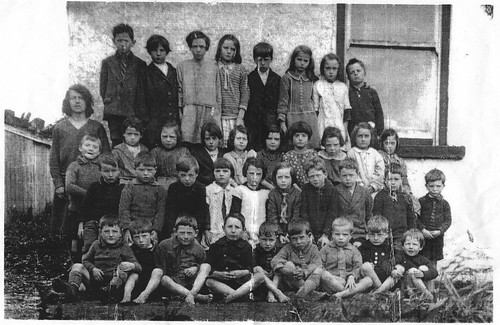
Aghamackalinn National School, County Monaghan, Ireland (1932)
Ireland 1932. By pantufla

Some people have suggested that only one 'entity' has real free will.

And only that one 'entity' is good.

That one person is 'God'.

Or the Tao, or the Force, or the Holy Spirit, or the divine...

Paradoxically, it may be that if we give up our supposed 'free will', we can then follow the will of 'God' (or go with the flow, tune into the Tao, realise that we are part of 'God') and live happily ever after.

IMG_7960
By Alexander Macfarlane

The Buddhists would say that our sense of being a separate 'self' is an illusion.

Blog: Pleasure and Joy

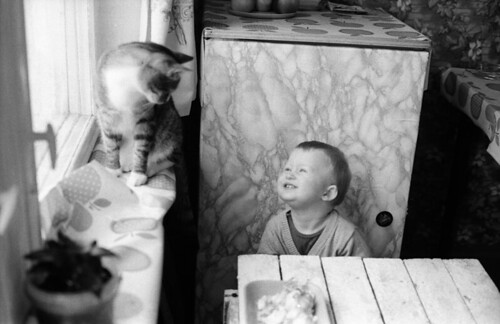
Untitled
By maria dupovkina

This raises the question of why we are not all tuned into 'God' already.

One can speculate that if God is going to create 'a real world', then, as with a game of golf, there has to be an element of chance.

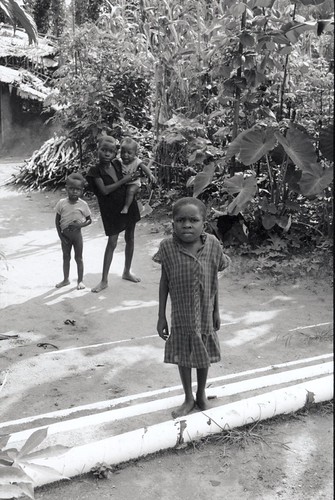
NGAaa09
By IWGIA

Of course, things may always have existed.

The Buddhists would argue that 'God' may not be the best term to use.

Some Buddhists are not keen on the idea of a creator God.

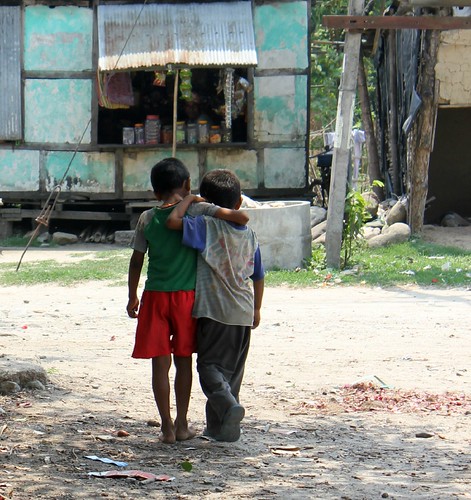
Buddies
By © Jamie Mitchell

Some Taoists would argue that every 'thing' and every 'action' is a mixture of 'good' and 'evil'.

"Taoists believe that nature is a continual balance between yin and yang, and that any attempt to go toward one extreme or the other will be ineffective, self-defeating, and short-lived."

What Taoists Believe

Summer rain
By Valery Titievsky

The Mohist philosophers in China believed that the purpose of life was universal, impartial love.

Mohism promoted a philosophy of impartial caring - a person should care equally for all other individuals, regardless of their actual relationship to him or her.[48]

Is free will an illusion?

Ruben V Rial-Planas writes

"We can test the problem with my most perfect identical twin: myself!

"Trying to remember the most important decisions I took in my life, I ask myself what I would have done if I had had the possibility to relive again any of the decisive moments of my life - with the same imperfect knowledge and with the same external constraints I had.

"The results of analyzing my perfect twin’s behaviour are, in my opinion, absolutely clarifying: reliving my life would have rendered a life identical to the one I actually lived.

brother n sister
By rongpuk

"I can distinguish between two types of events as determinants of every minute fact that occurred in my life.

"Some were the result of conscious decisions, in many cases taken as the result of an evaluation of pros and cons (always with incomplete knowledge of the real situation).

"As it is impossible for me to take stupid decisions (the stupidity defined by myself), I was forced to decide in a determined way, searching the best results.

"In other cases my behaviour was the result of random and/or uncontrolled external factors. In the first case I would repeat my action; in the second, my response would be forced.

"However, if the external random factors would be the same, I also would repeat my action

KFC Hunger
By Mayank Austen Soofi

"So, the life of my identical twin entirely repeating my own life shows that I never had a true free will...

"My identical twin shows me the inescapability of Hume’s fork: My actions are either causally determined or random.

"In either case, I am not free."

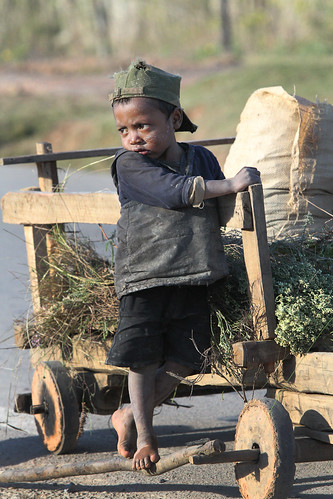
Madagascar
By babasteve

Etienne Vermeersch writes (Is free will an illusion?):

"Ruben Rial Planas shows in his 'twin analysis' that he has made two types of decisions in his life: 

"Those which were conscious, determined decisions.

"And the others 'the result of random and/or uncontrolled external factors'.

"To my astonishment he concludes: 'In either case I am not free', although he just made a brilliant analysis of the really free decisions: the conscious determined ones."


Minggu, 15 Juni 2014

HOW TO EXPLAIN THE WORLD


At its best after 4 minutes.

How to explain the world?

0 = +x -x

Particles are constantly popping in and out of existence, according to the scientists.


The +x -x could be seen as representing all possible things.


According to the scientists, a bottle of Coke exists in all possible locations, until it is observed existing in one particular location.

Atom Is Seen in 2 Places at Once - New York Times 

The observer apparently decides where the bottle of Coke is to be found.


And, just as a bottle of Coke can be in more than one place at once, it can also be in more than one time period at once.

The observer apparently decides the time period in which the bottle of Coke is to be found.


Our understanding of time and space may be out of date, according to the scientists.

"The world has the incomprehensible property of existing in a 'superposition' of possible states and every so often plumps for one or another."

Can Quantum Mechanics Explain Free Will?

Jean Piaget[7] stated that young children have to learn about time and space.


There is a lion somewhere ahead of us.

Perhaps we observe it right in front of us, about to eat us.

Or, perhaps we observe it sitting peacefully, eating manna from heaven.

Particles appear to exist in all states simultaneously according to the experiments in quantum superposition


"Experiments in quantum physics seem to demonstrate the need for an observer to be present to make potentialities become real... 

"Basically, what quantum theory says is that fundamental particles are empty of inherent existence and exist in an undefined state of potentialities. 

"They have no inherent existence from their own side and do not become 'real' until a mind interacts with them and gives them meaning. 

"Whenever and wherever there is no mind there is no meaning and no reality."

The above film is controversial and it has been argued that the authors do not understand quantum physics.

Richard Dawkins stated that "the authors seem undecided whether their theme is quantum theory or consciousness. Both are indeed mysterious, and their genuine mystery needs none of the hype with which this film relentlessly and noisily belabours us", concluding that the film is "tosh".

Some ideas discussed in the film are:

1. The universe is best seen as constructed from thought (or ideas) rather than from substance.

2. "Empty space" is not empty.

3. Matter is not solid.

4. Electrons pop in and out of existence and it is unknown where they disappear to.


5. Beliefs about who one is and what is real are a direct cause of oneself and of one's own realities.

6. In the narrative segments of the movie, Marlee Matlin portrays Amanda, a photographer who plays the role of everywoman as she experiences her life from startlingly new and different perspectives.

In the documentary segments of the film, interviewees discuss the roots and meaning of Amanda's experiences. 

The comments focus primarily on a single theme: We create our own reality.