Tampilkan postingan dengan label children. Tampilkan semua postingan

Jumat, 08 Juli 2016

NON ATTACHMENT; HEALING

...

A hospital doctor enters a ward for sick children who have a variety of ailments and disabilities.

Ideally, the doctor avoids being infected by any 'germs' that the children might be carrying.

Ideally the doctor avoids being 'infected' by any physical and emotional pains that the children might be suffering from.


There are a lot of children with 'problems'.

In the USA, 'child disabilities due to neurodevelopmental and mental health problems have increased greatly.'

'Nearly six million kids had a disability in 2010 - almost one million more than in 2001.'

dailymail

If we were to be infected by the physical and emotional pains of all these millions of children we would be in trouble.

shoes

However, we can have an influence for good on someone who is suffering.

1. Scientists have discovered that pairs of tiny particles can be invisibly connected even when they are some distance apart.

When the scientists carry out an action on one particle, the other particle is instananeously affected, even though it is many miles apart.

A Dutch team has proven that 'spooky action at a distance' is real.

dailymail.

2. According to some research at Princeton University

We can mentally influence - and are influenced by - the thoughts of others.

We can mentally influence biological processes in bodies other than our own.

We can mentally influence the functioning of non-biological systems.

The Next Great Turning - Context Institute

Sia Furler's 'Chandelier', from the album 1000 Forms of Fear, suggests mind-control?

3. A team of psychologists from Saint Louis University claims that stress can be spread from person to person like a virus.

We can be infected by the stressed person's odour, posture, facial expression and tone of voice.

The researchers put the participants into pairs.

One member of the pair had to make a public speech and the other had simply to watch the speech.

The researchers measured the levels of cortisol and a stress-related salivary enzyme in both the stressed speaker and in the observer.

The researchers found that the stress response in the witnesses was 'proportional to that of their paired speakers'.

ABC. / dailymail.

Saint Louis University is associated with the CIA's MK-ULTRA mind control programme.

Now, if stress can spread like a virus, so too can love and healing spread like a virus.


Can we feel compassion without feeling some of the suffering of the person in distress?

1. Imagine the doctor entering the hospital ward.

It does not help if the doctor is shaking and weeping.

The good doctor, while feeling compassion, detaches himself from suffering.

The good doctor detaches himself from his selfish ego.

It is the selfish ego which produces anger, grief, worry, and despair.

The good doctor is positive, loving and calm.

This helps the sick patient.

schweitzerfellowship.wordpress.com...

2. Imagine you are the pilot of a passenger plane which has just been struck by some dangerous emergency.

It does not help you, nor the passengers, if your ego feels extreme fear.

On the other hand, a little fear might prevent you from taking foolish risks.

A game of golf would not be real if there were not some minor irritations; but you want to avoid the extremes.


3. Imagine you are the parent of a child who has just been killed by agents of the US government.

Ask yourself - why does the government carry out such acts of terrorism as part of its 'Strategy of Tension'?

They want to get you angry with, and scared of, the 'terrorists'.

When people are scared they will obey their 'big brother' government.

So, detach yourself from fear and anger.

Fear and anger make you sick.


4. There may be times when we are hit by extreme fear, anger, grief, worry and despair.

But we should practise non-attachment to such extremes.

This means not holding on.


michaelwilliammcdonald.blogspot.com ...

5. We should practise non-attachment to lots of things.
"All the delightful things of the world - sweet sounds, lovely forms, all the pleasant tastes and touches and thoughts - these are all agreed to bring happiness if they are not grasped and possessed.

"But if you regard them merely as pleasures for your own use and satisfaction and do not see them as passing wonders, they will bring suffering."

-Sutta Nipata

Blog: Pleasure and Joy


6. It is not a good idea to 'suppress' our feelings.

Research shows that people who are able to talk about their grief, anger or fear get rid of these negative feelings more quickly.

People who are not able to talk about these feelings are more likely to suffer ill health, mental or physical.

The 'good doctor' has the knack of being non-attached to grief, anger or fear when he enters the ward.

Some people get angry when there is a long queue at the airport.

Some people learn not to get angry.

They are not supressing their anger; they just don't feel anger.


We see ourselves as separate selves.

Our body feels the pleasures and pains of life.

Imagine switching out of the SELF mode into the NON-SELF mode.

In the NON-SELF mode there is no grasping of pain or pleasure.

But this is difficult for our minds to imagine, just as 'infinity' is difficult to imagine.


Some people write about the dangers of talking about the Oneness of everything.

"Holding to both the oneness and multiplicity of existence takes greater spiritual maturity...

"It requires being present with the moment with all it's paradox and radicalness.

"Experiencing both the bliss and sorrow of existence takes greater spiritual maturity...

"It requires us to be present to the entire situation of existence, our own and all others.

"In terms of our tradition, we describe this as the dance between emptiness and form and our path as the willingness to experience both and their mutuality.

"The main emphasis of our path is to show up wakefully to the play of emptiness and form..."

Not Duality is Not Non Duality | School of Yogic Buddhism
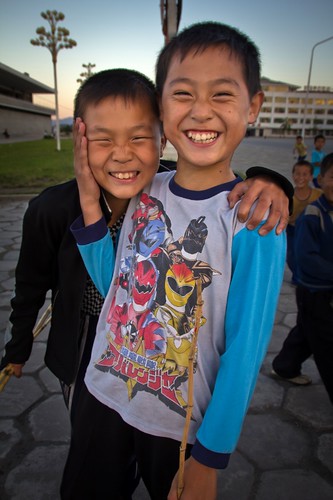
Smiling north korean kids
North Korean kids. By Benoit Cappronnier

Is life fair?

Why does one person apparently 'choose' to be 'good' and another person apparently 'choose' to be 'bad'?

According to some philosophers, our actions are either determined by matters such as heredity and environment, or they are a matter of chance.
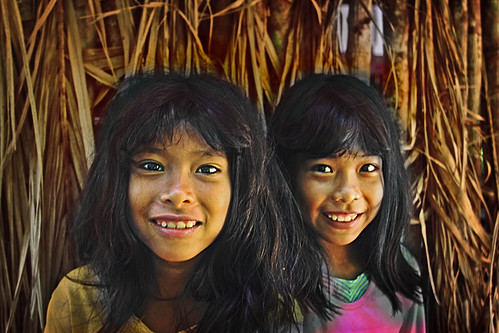
How can we...
Brazil. By carf

It suits the top criminals to believe that their 'wicked' actions are purely the result of heredity, environment and chance.

But, we do know that when people believe in some kind of 'free will', they do tend to behave better.
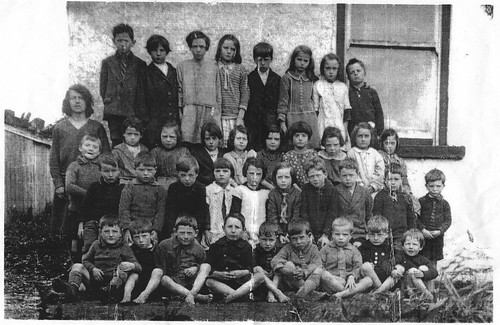
Aghamackalinn National School, County Monaghan, Ireland (1932)
Ireland 1932. By pantufla

Some people have suggested that only one 'entity' has real free will.

And only that one 'entity' is good.

That one person is 'God'.

Or the Tao, or the Force, or the Holy Spirit, or the divine...

Paradoxically, it may be that if we give up our supposed 'free will', we can then follow the will of 'God' (or go with the flow, tune into the Tao, realise that we are part of 'God') and live happily ever after.
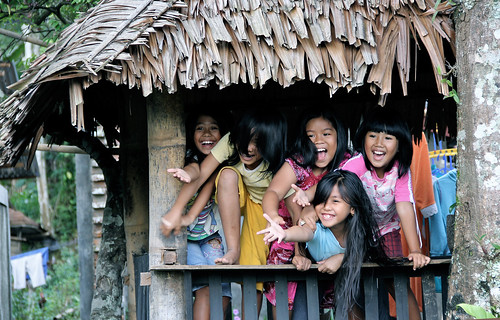
IMG_7960
By Alexander Macfarlane

The Buddhists would say that our sense of being a separate 'self' is an illusion.

Blog: Pleasure and Joy
Untitled
By maria dupovkina

This raises the question of why we are not all tuned into 'God' already.

One can speculate that if God is going to create 'a real world', then, as with a game of golf, there has to be an element of chance.
NGAaa09
By IWGIA

Of course, things may always have existed.

The Buddhists would argue that 'God' may not be the best term to use.

Some Buddhists are not keen on the idea of a creator God.
Buddies
By © Jamie Mitchell

Some Taoists would argue that every 'thing' and every 'action' is a mixture of 'good' and 'evil'.

"Taoists believe that nature is a continual balance between yin and yang, and that any attempt to go toward one extreme or the other will be ineffective, self-defeating, and short-lived."

What Taoists Believe

Summer rain
By Valery Titievsky

The Mohist philosophers in China believed that the purpose of life was universal, impartial love.

Mohism promoted a philosophy of impartial caring - a person should care equally for all other individuals, regardless of their actual relationship to him or her.[48]

Is free will an illusion?

Ruben V Rial-Planas writes

"We can test the problem with my most perfect identical twin: myself!

"Trying to remember the most important decisions I took in my life, I ask myself what I would have done if I had had the possibility to relive again any of the decisive moments of my life - with the same imperfect knowledge and with the same external constraints I had.

"The results of analyzing my perfect twin’s behaviour are, in my opinion, absolutely clarifying: reliving my life would have rendered a life identical to the one I actually lived.
brother n sister
By rongpuk

"I can distinguish between two types of events as determinants of every minute fact that occurred in my life.

"Some were the result of conscious decisions, in many cases taken as the result of an evaluation of pros and cons (always with incomplete knowledge of the real situation).

"As it is impossible for me to take stupid decisions (the stupidity defined by myself), I was forced to decide in a determined way, searching the best results.

"In other cases my behaviour was the result of random and/or uncontrolled external factors. In the first case I would repeat my action; in the second, my response would be forced.

"However, if the external random factors would be the same, I also would repeat my action
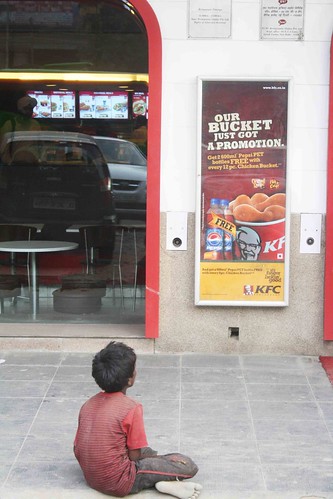
KFC Hunger
By Mayank Austen Soofi

"So, the life of my identical twin entirely repeating my own life shows that I never had a true free will...

"My identical twin shows me the inescapability of Hume’s fork: My actions are either causally determined or random.

"In either case, I am not free."
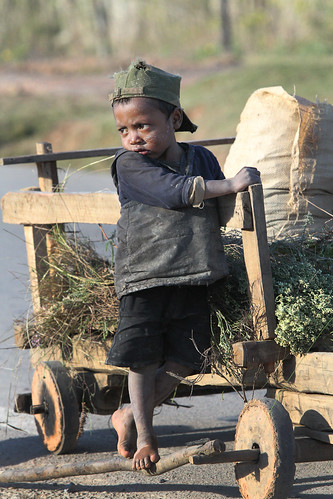
Madagascar
By babasteve

Etienne Vermeersch writes (Is free will an illusion?):

"Ruben Rial Planas shows in his 'twin analysis' that he has made two types of decisions in his life: 

"Those which were conscious, determined decisions.

"And the others 'the result of random and/or uncontrolled external factors'.

"To my astonishment he concludes: 'In either case I am not free', although he just made a brilliant analysis of the really free decisions: the conscious determined ones."



Senin, 27 Juni 2016

POPE ON GAYS, WOMEN, WEAPONS...


Pope Francis has declared that the Church should ask gay people and women for forgiveness - for hundreds of years of ill treatment at its hands.

Pope Francis said: "The Church ... must also apologize to the poor as well, to the women who have been exploited, to children who have been exploited by work.

"It must apologize for having blessed so many weapons."

Church should apologize to gays & women for ill treatment – Pope Francis.

Jumat, 10 Februari 2012

One or Two Languages?

Is the Dutch language
suffering because of
bilingualism?
Following a Radio Netherlands Worldwide article about bilingualism in kids I wrote a blog post on Life with a Double Buggy. The conversation and discussion has been popular on Twitter and on the blog - the short version is that the article reported that the Dutch consultatiebureaus advise parents to teach their children open language only - and therefore do not encourage bilingualism in children here. This goes completely against my own experiences - and that of many others.

Want to join in or read more? Pop over to Life with a Double Buggy and let us know about your experiences. For those in other countries, what do you think about teaching your children two or more languages? 

Kamis, 05 Januari 2012

A New Blog for 2012

2011 has brought lots of changes to the van Mulligen household. One of the consequences of these changes is that my focus has been solely on my role as a mother for the last few months.

Time restraints have left this blog a little neglected in recent months and whilst I haven't had time to sit in front of my PC and write, I have had lots of time to think.

Becoming and fulfilling the role as a mother in a country not your own brings its fair share of challenges, questions and unforgettable experiences. The language and culture are different. The systems and support processes are unexplored territory for new parents abroad. Sometimes it's hard to know where to start, where to turn and what it all means.

With the birth of my third child in the Netherlands, I've decided it's time for a change in direction for my blog writing too.

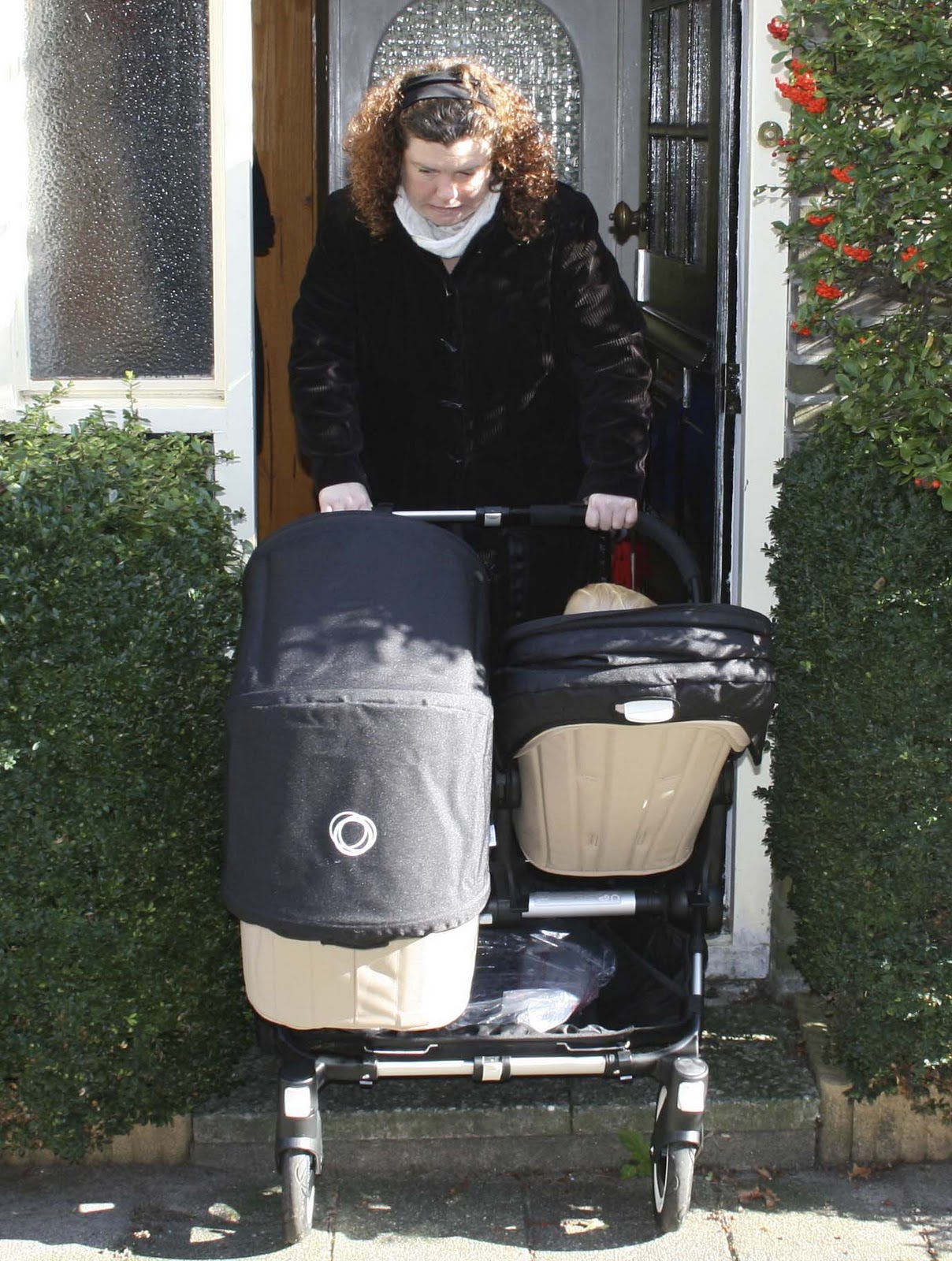
I am excited to share the creation of a new blog entitled "Life with a Double Buggy". My new blog will focus solely on parenthood, and particularly the expat parenthood journey. It will be a platform to share my parenting experiences here in the Netherlands. I hope it will help and entertain other expats out there.

That's not to say that A Letter from the Netherlands is dead, far from it. It will remain here and I will also post on different topics here and there when I can. In short, whilst this blog is still being read it will continue to occupy this space!

I hope that many of you will follow me over to "Life with a Double Buggy" and I look forward to reading your comments along the way.

Rabu, 26 Oktober 2011

A Baby Boy!

I have let people know on Facebook and Twitter about the safe arrival of our latest addition - but until now have not found the time to provide a proper blog update - and after a prod in the week - here it is.

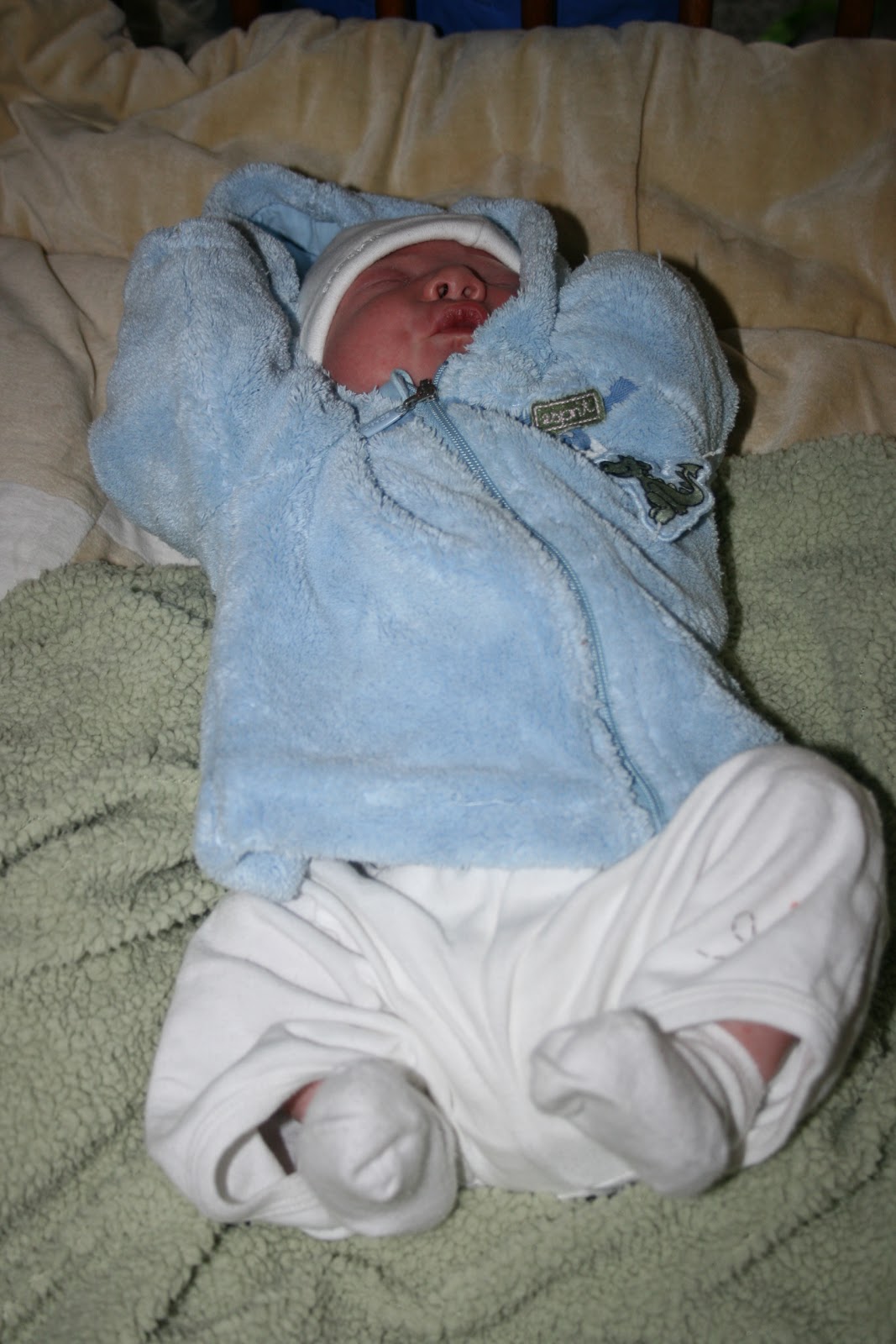
My third son made his appearance at 9.09am on Friday 7th October weighing a kilo less than both his brothers at 3520 grams but making up for it in his length of 52cm.

The weeks since have been quite 'pittig' (as the Dutch say) with a re-admittance to hospital for me (nothing like being taken away in an ambulance to get the street's attention and freak your children out) and reflux diagnosed for the little one. Sleepless nights are certainly no stranger to me and his dad.....and I can honestly say I have gained a good understanding of the ins and outs of the Dutch medical system for later blog posts.......

However, things are getting back on track for us all.

Thanks for all the congratulations and well wishes over the last few weeks.

Senin, 26 September 2011

Bikes, Kids and the Dutch

A Bike Child Carrier or Fietskar in Dutch
Photo: Tom Pickering
A recent article confirmed that it's actually safer to ferry your children around in a bakfiets (a carrier fixed to the front of the bike) than a child seat fixed to either the front or back of your bike. The reason for this is simple - if you are involved in an accident with a car whilst on your bike more often than not your head tends to meet the windscreen. In a bakfiets this won't happen. The other reason cited for it being safer than a child seat is because drivers notice a bakfiets more than child seats. It all makes sense to me when you think about it logically - with a bakfiets the centre of gravity is lower and it is therefore more stable.

With the imminent birth of our third baby I have thought about a fietskar (a child carrier in the form of a trailer that fits to the back of a bike) as getting about would be a lot easier by bike as the kids get a little bigger. It is safer than two children in seats on the front and back of my bike - particularly given my amateurish, shaky cycling skills. The downside of bike trailers or bakfiets is that they are not cheap!

For a bakfiets you can expect to part with more than a thousand of your hard earned euro - but it is a replacement for a car for many. A bike child seat will set you back anything from 50 to 100 euro depending on the model and the price for a trailer for your bike starts around 170 euro (but remember you need to buy accessories to attach your children safely in the trailer....) and rises easily to near 1000 euro.......

Do you cycle around with your children on your bike? Do you use child seats, a trailer of a bakfiets? Which form do you feel is safer? Did you transport your kids by bike before you moved to the Netherlands? I would love to hear your views!

Rabu, 21 September 2011

A Little Update

Some of you may have noticed there has been a bit of a blogging gap since the end of August - and all I can say is that I did warn you...... It's been a mad few weeks making the last preparations for our impending arrival and the blog has fallen by the wayside in the rush to get ourselves ready.

Back in July we had the builders in to split up our top floor in to two rooms. This was after a prospective house move came to nothing and we decided to stay put for the foreseeable future. It was a dusty but fast moving week. We then had someone in to install new radiators in the new rooms... and then we could start decorating. Looking after two children, being 36 weeks pregnant and up a ladder painting a ceiling and washing baby clothes and buying baby essentials certainly added up to a heavy, tiring few weeks. Blogging on top of it all never entered my head.

But there is light at the end of the tunnel.... or in other words the due date is looming and we are ready! The baby's room is all set for our new arrival and my youngest has a new room of his own too (albeit with furniture delivered by Babypark.nl that looks like it fell off the lorry on the way here or was used as a show model, but that is an ongoing battle with them and another useless Dutch customer service story for a rainy day).

So there you have it - the last few weeks in the Van Mulligen household and the reason for the lack of blog postings....... I am now officially two weeks in to maternity leave so work wise life has pretty much ground to a halt - but watch this space! My study has been rehoused and is back up and running so I may just be back to chip in every now and then.

Minggu, 14 Agustus 2011

UFOs and Chips - Kids Meals in the Netherlands

Well, when I label this post 'kids meals'... I do it a little tongue in cheek to be honest. I'm not really sure if you can call what is on offer here for children in restaurants and takeaways a child's meal. Why on earth are all meals here aimed at children fried? Every kid's meal is some unidentified fried object (UFO) served with chips, which if I am not mistaken means that the entire plate has seen the inside of a deep fat fryer.

It's usually a frikandel, a burger or a pancake covered in more sugar and sweets than I would eat in a year. What is that about?

Health consciousness plays no part in the assembling of children's menus here. Many places in the UK do at least make some kind of effort to produce something that is at least half way healthy for a child to eat, such as a plate of pasta and vegetables.

Why? Why is Dutch catering for children so unhealthy? Anybody? Is it a culture thing? A lack of imagination? Is there an exception to this somewhere? Has somebody found a kid's meal worthy of their kid's stomach?


Minggu, 19 Juni 2011

Crikey, That Snail's Got No Clothes On

A Naked Snail Photo: Antonio Garcia
I was pushing my one year old in his pram whilst my four year was jumping over puddles on the pavement next to us on our way back to infant school after lunch. The heavens had opened that morning and the rain had been continuous since I had done the first school run of the day that morning. In front of us was a mother with a four year old girl dressed from head to toe in pink in one hand and her slightly older brother in the other hand. Suddenly the trip stopped before us and the young girl let out a shriek,

"Ew. Wat is dat mama?" she asked, turning to her mother. She pointed at the ground to a slug.

"Dat is een naaktslak," said her mother laughing. The Dutch word for slug, naaktslak, litterally translates to naked snail. Both children were now laughing. The young boy said,

"Yes, he woke up this morning and forgot to put his clothes on." His little sister giggled. As did I. My four year old looked up at me,

"Nee, toch mama?" he asked, questioning the validity of the boy's statement. The mother continued,

"Yes, he must have been very confused when he woke this morning."

It reminded me just how fabulous the Dutch language can be!

Minggu, 01 Mei 2011

Helmet Therapy in the Netherlands

Helmet Therapy - a fairly common sight amongst babies
in the Netherlands
Photo: (C) The Writing Well
Expatica has published my latest article on a topic which will be unfamiliar to most  - but it is a process we stumbled upon last year when the Consultatiebureau referred us through to a physiotherapist because my baby had a strong positional preference.

I found it very hard to find much information on helmet therapy (or redressietherapie) in the Netherlands, particularly in English, so I decided to share our story for other expat parents out there.

It is also to enlighten others who wonder why - babies with specially designed helmets is a common sight on the streets of the Netherlands these days.

You can read the full article on http://www.expatica.com/nl/health_fitness/healthcare/Helmet-therapy-in-the-Netherlands_17323.html

Minggu, 27 Maret 2011

The Ins and Outs of Expat Careers: Louise Wiles and Expat Coaching

Photo: Enrico Corno
Born in the UK, expat coach Louise Wiles now calls Portugal home but this is far from her first stop on the expat express train. She moved to Spain a decade ago and then to Portugal before she repatriated back to the UK for three years. She then lived on Madeira Island for five years before landing last year in her current destination of Lisbon.

All this moving around is a result of her husband's career. But what about her own career? How has she kept it going with all the moving around and what advice does she have for other accompanying partners? I spoke to her to find out and discovered the expat career path is not always a straight one - but planning the journey is essential.

I asked Louise about her career starting point and what effect a move overseas had on her career. Louise explains how she turned a move overseas into a career opportunity,

"My original profession was in sales and then training in Sales and Management. When I first moved to Spain I considered working for the same insurance group, AXA, in Madrid but decided I wanted to do something different. I trained as an English teacher (TEFL) and had my own business for a year. Then I decided it was my opportunity to do what I had always wished I had done and study Psychology." 

Louise saw a move overseas as the chance to retrain
through distance learning
Photo: Shho
Whilst living in Spain, Louise obtained a Psychology degree from the Open University in the UK and followed it with a Masters in Occupational Psychology from the UK based University of Leicester. Both of her degrees were obtained through distance learning.

However, having obtained the qualifications, expat life posed another challenge. Louise explains,

"A big issue was how to get the qualifications recognised here in Portugal. Because I was moving around I never completed my three years practice work in order to become a chartered occupational psychologist."

When Louise left the UK for the second time, she went armed with a plan,

"I chose to complete a certificate in coaching and to build a business from home – portable and related to my experience as an accompanying partner."

Her portable career solution not only works with her mobile lifestyle, but it also helps keep the balance in her home life. Louise says,

"Running my own business also means that I am able to fit it alongside my other commitments as a mother of two young kids with a husband who travels a lot – my business needs to be run from home and flexible enough to work around the demands of two young children (8 and 5)."

Many expats face a similar need to maintain flexible working arrangements - and Louise has created her own solution.

I asked Louise what kind of support she has had to build and maintain her own career abroad. The answer is disappointingly typical for many accompanying spouses. 

"None – from any outside party – just me and support financially from my husband (well our family income!!).  Actually I think I did get financing for a language course and my TEFL course in Madrid from my husband's company during our first relocation – but I've have had no support since," shares Louise.

This lack of support in her own situation is the reason why Louise is developing a programme for accompanying partners which aims to identify and develop a portable solution for their lives abroad.

Louise's number one tip for others who want to pursue their career abroad is simple,

"Do your research before you leave your home country. Make sure your expectations are realistic before you move abroad."

She goes on to say,
"Check whether your home country qualifications are recognised in your destination country and if they are not investigate what you will need to do to convert them – if this is possible. If not, consider how you could build your own business or freelance whilst abroad. Think about how you would set up a business and what the requirements for registering that business abroad would be – you may not even be able to do so in which case consider setting up your business in your home country before leaving. You could also consider working as an associate for someone else."

I asked this creative expat coach which three skills she thinks are essential for the success of an overseas career. She says without hesitation,

"Determination, creativity and passion."

Louise's Recommended Links

Career in Your Suitcase by Jo Parfitt - a recommended read by Louise Wiles


Louise Wiles offers specific programmes for accompanying partners who want to create an individual portable approach to their career and lifestyle on relocating abroad.

To find out more about Louise and her services visit her website: http://www.SuccessAbroadCoaching.com or contact her by email
Louise@SuccessAbroadCoaching.com. You can also follow her on Twitter: LWexpatlife


Minggu, 06 Maret 2011

Expat Challenges by Kate Berger

Kate Berger, an expat expert
specialising in helping expat kids
For the Expats@Home February newsletter, I asked expat expert, Kate Berger, to share a little about some of the challenges that face expats. She interviewed some local expats from different countries and shared them with us. The result was interesting with issues ranging from how to make friends to ensuring that your retirement plan can sustain you in later life.

Kate Berger offers emotional health services for expatriate children and adolescents in the Amsterdam area through her practice, The Expat Kids Club. Individual and group sessions are offered, and target issues including anxiety, family & peer conficts, and socio/emotional adjustment to non-native lifestyles & cultures. For more information visit http://www.expatkidsclub.com/index.html

If you want to read the article in it's entirety visit the archive. If you want to sign up for future editions of my newsletter visit my website page.

Selasa, 15 Februari 2011

A Little Help in the Delivery Room for Expats: Doulas

Having a baby in a foreign country can be quite daunting and if your mum and your best friend live back in your country of origin then having your nearest and dearest around you at such an emotional time can be very hard to plan. However, hiring a doula can help - for many many reasons. A doula is someone who provides support (non-medical) during pregnancy, labour and the birth. For the birth of my second baby, I had a doula on hand and I would recommend it to anyone!!

If you want to know more, read an article I wrote for I Am Expat about my experience with a doula.

Senin, 10 Januari 2011

Guest Post For Clogs and Tulips

Photo: (c) Amanda van Mulligen
If you have any interest in what it's like to have a baby in the Netherlands, then I've just written a guest post for Tiffany's blog, Clogs and Tulips.

"If you trawl expat forums, you are likely to come across some heavy criticism of the Dutch maternity system. And yes, I agree, having a baby in the Netherlands may not be the same as having a baby back in your home country but there are worse things you can do. Here’s what I’ve learnt through two pregnancies and births in the Netherlands."

Read the full post here.

Minggu, 12 Desember 2010

Passing on Festive Traditions

 On Sunday morning my son woke and decided to treat us to a medley of various Sinterklaas songs; this despite the fact that Pakjesavond and the celebration of Sinterklaas passed a week ago. Obviously spurred on by the theme he hurried downstairs, took one of his shoes from the hall cupboard and placed it in the living room, in the same magical place that had proved profitable just a week or so before. He placed a carrot in his shoe and put some milk in a Tupperware bowl for Sint’s horse. And all this by 9am.

Explaining to my nearly three year old son why putting his shoe out last weekend was redundant was easy.
“Sinterklaas has gone back to Spain, with his horse and all his Zwarte Pieten,” I explained. “He’ll be back next year.”
“The shoe is for the Kerstman,” replies my smart son.
“Oh ok, well Father Christmas doesn’t put presents in shoes. He only comes to the house on Christmas Eve and that is a lot of sleeps away,” I told him.

He looked stumped. And of course why shouldn’t he. Looking deploringly at my husband, I tried to scramble an answer together that explained that Sinterklaas and Father Christmas are different beings (when in fact they are not), that they have different modes of transport (one has a horse and the other reindeer and a sleigh), they come at different times of the year (5 December and 25th December), put presents in different receptacles (one preferring a shoe over the stocking) and they have different types of helpers (Sinterklaas opting for Zwarte Pieten and Father Christmas making use of busy little elves to make toys). I did not even attempt to go into their living arrangements: why one chooses the warmer climate of Spain and the other lives in the rather cold, snowy Lapland. That is a conversation for much later, if he ever asks.

Of course, the one thing he got loud and clear was that Father Christmas also brings presents to good boys and girls across the world. So he placed the carrot back in the vegetable rack, his shoe back in the cupboard and handed me the tub of milk. Then he pointed to his stocking, and I reiterated that on Christmas Eve he could hang it on his bed and Father Christmas would fill it with presents, as long as he is a good boy…….

And that closed the conversation out for now. The discussion we would eventually have with our children about the Dutch Sinterklaas and the British version, that of Father Christmas, was a topic of conversation between me and my husband some time ago, long before our son was even born. To reconcile the two events seemed quite difficult when we talked about it, but it is something that needs to be done in a multi-cultural household.

The Dutch ‘do’ Christmas much more than they used to. The main celebration used to be Sinterklaas on the 5th December but Christmas has become more commercial here and now it is also a time of giving gifts. However, my husband’s childhood memories, and the traditions around Christmas are very different to mine. In England we do not celebrate Sinterklaas. Until ten years ago, I had never heard of it and knew nothing about it. It was all about Christmas for us.

So our first Christmas together was a unique and new experience for my Dutch partner: Christmas stockings, Christmas pudding, brandy butter, presents under the Christmas tree, mince pies, turkey with stuffing and cranberry sauce and pulling Christmas crackers before tucking into lunch. This was all new to him, but for me, all traditional.

So now, every year, he directs the Sinterklaas celebration and I organise Christmas. This way we pass on our own holiday traditions to each other, and our children, and share the uniqueness of our culture with each other. Our son of course benefits as he gets two rounds of presents……. the luck of a child with a mother from England and a father from the Netherlands.

Minggu, 07 November 2010

Mama and Papa or Mummy and Daddy?

Photo: Dirk Herrmann
An interesting post caught my eye on the networking site Insego this week. A member asked if other parents preferred to be called mama or papa, like the Dutch use, or whether other expats preferred to use the terms of their native language - so in my case mummy and daddy. It struck a chord because it is something I have thought about since becoming a parent.

I speak English to my sons. The idea is that they speak (and in the case of my youngest, will speak) English back to me. However, my eldest calls me mama, which is what he learnt to call me from me and his 'papa'. I never really thought anything of the term mama, nor particularly consciously decided on mama instead of mummy, until one day my son called me mummy. And it felt weird. it somehow did not fit.

He had called me mama since the day he could talk and after an extended trip to the UK, he came out suddenly with mummy. I didn't react instantly because it took a second to realise he was actually addressing me. I corrected him with "mama" and he looked confused. Everyone else in England had used mummy when referring to me - "Shall we see if your mummy wants to do that?" "Maybe ask your mummy before you eat that." So he had adopted it and begun using it back in Holland. To my dismay. And I still am not sure, even now, why it dismayed me. But it did. And he now, generally, calls me mama. Every now and then he reverts to mummy but it is so infrequent it doesn't bother me.

I think I got used to hearing mama from him so when he used mummy it sounded alien. However, there is also another part that prefers mama because it reminds me of who we are as a family. My children are Dutch and no matter what my nationality is, they are currently more Dutch than English. And so, somehow, it seems more natural for them to call me mama.

What do your children call you? Do you use terms from your host or birth country?

Jumat, 05 November 2010

Bonfire Night - Thwarting An Early Terrorist Threat

Wrapped up in woollen scarves, hats and gloves we would stand excitedly in the dark waiting for the lighting of the bonfire; for the moment when the flames would spring in to life and the wood would start to crackle, for the moment that we could feel the heat on our cold, red cheeks. The guy perched at the top of the fire would eventually fall and burn, the effort of making the figure disappearing literally in a puff of smoke.

Once the bonfire was in full flame, we would turn our excitement to the fireworks which would be next to start. In the meantime we warmed ourselves and filled our tummies with soup, a jacket potato or a hot dog or hamburger.

Then the firework display would start and the crowd would "ooh" and "aahhhh" in unison as Catherine Wheels spun, spider fireworks trailed their orange legs across the dark, starry sky and Roman Candles sent shooting stars heaven bound. We would wave our sparklers around, writing our names in light. The bangs, whistles, screeches and crackles echoed across each other as the firework show came to its finale.

Bonfire night every 5th November sticks with me, the date holding a feast of childhood memories like a box of treasures I can open every year on this day. Of course, since I moved to the Netherlands participating in Bonfire night has become harder and I have only been in the UK to celebrate 5th November twice since 2000. As my children grow up this is a track record I aim to change so that they can learn and take part in a little piece of British history and culture. For Bonfire night is a British thing - yes, I have had lots of people back home saying to me over the years "Don't they celebrate bonfire night in Holland then?" No they don't. Of course they don't - Guy Fawkes made no attempt to blow up the Dutch parliament did he?

But he did have a cunning plan to get rid of the protestant monarch of the time by blowing up Parliament and King James I with it in 1605. The aim was to replace the head of state with a catholic one. Luckily for King James I the gunpowder plot was discovered (the anti-terrorist unit being on full alert back then too by all accounts) and the plotters were arrested and swiftly executed. End of Guy Fawkes and his friends.

On 5th November, 1605 the first 'thanksgiving' was celebrated and marked with the ringing of church bells and the lighting of bonfires. Hence, why the British, over 400 years later, still light bonfires on 5th November and put an effigy (the guy, named after Guy Fawkes) on top of the fire. The fireworks represent the foiled gunpowder plot - that and it's pretty.......